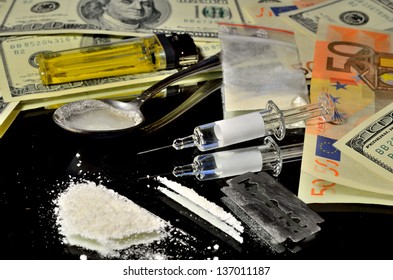
The black market illegal drugs trade is a complex and multifaceted issue that affects communities worldwide. Understanding the dynamics of this trade is essential for recognizing its impact on society, health, and law enforcement. In this article, we will explore the various aspects of the black market for illegal drugs, including its definitions, causes, consequences, and potential solutions.
The investigation found that Lebanese criminal and drug kingpin Hassan Daqou collaborated with Syria's Fourth Armoured Division on trafficiking billions of dollars of drugs, under the command of General Ghassan Bilal, the right-hand man of Maher al-Assad. Under Maher's supervision, the 4th Armoured Division expanded captagon production and trafficking from Syria into a "business model controlled by the regime". General Maher al-Assad, younger brother of Syrian dictator Bashar al-Assad and commander of the Fourth Armoured Division, directly supervised the production, smuggling and profiteering of the drug business. By fostering expansion of trade and global transportation networks, free trade encourages cooperation and formation of alliances among criminal organizations across different countries.The drug trade in Latin America emerged in the early 1930s. This strengthens the drug industry while weakening the efforts of law enforcement to monitor the flow of drug money into the legitimate economy. Currently, the structure and operation of the illicit drug industry is described mainly in terms of an international division of labor.
Black Market Illegal Drugs
- These underground economies are omnipresent, existing in market oriented as well as in centrally planned nations, be they developed or developing.
- Finally, we introduce a first-mover advantage to the public firm in the quality selection stage.
- Additionally, the livelihood of 3.2 million people is dependent on the drug cartels.
- Our main results were derived restricting our attention to situations where the heterogeneity in the taste for quality is such that both firms are active in equilibrium.
The term "black market" refers to the illegal trade of goods and services that circumvent government regulations and laws. In the context of black market illegal drugs, this includes a range of substances from marijuana to synthetic opioids, sold without legal oversight.
The 1858 Treaty of Tianjin, which ended the Second Opium War, stipulated that the Qing government would open several ports to foreign trade, including opium. Prior to the 20th century, governments rarely made a major effort to proscribe recreational drug use, though several smoking bans were passed by authorities in Europe and Asia during the early modern era. Due to the restrictions around opioid addiction medication, the black market is growing faster and stronger every day. The raging opioid epidemic in the US has given rise to a new sector in the illegal economy. According to various researchers and journalists, many individuals manage their disorders with the black market’s help. That would make the US black market worth around $2.55 trillion; still, that number is only an estimate.
Causes of the Black Market for Illegal Drugs
- Demand: The insatiable demand for various drugs fuels the black market. Many individuals seek substances for recreational use, medical needs, or as part of addiction struggles.
- Accessibility: The unregulated nature of the black market often makes these drugs easier to obtain compared to legally prescribed options, especially in regions with restrictive laws.
- Profitability: The immense profits that can be made from the illegal drug trade make it an attractive opportunity for traffickers and dealers.
- Societal Issues: Economic instability, lack of education, and social inequality contribute to the proliferation of the black market.
Impact of the Black Market for Illegal Drugs
The implications of the black market for illegal drugs extend far beyond individual users. Here are some significant impacts:
- Health Risks: Users of black market drugs face severe health risks due to unregulated manufacturing processes, leading to contamination and overdose.
- Crime Rates: The black market fuels organized crime, violence, and corruption, leading to significant societal harm.
- Legal Consequences: Individuals involved in the trade or possession of black market drugs face severe legal penalties, including imprisonment.
- Impact on Families: Addiction can devastate families, leading to emotional strain, financial hardship, and social isolation.
Solutions and Alternatives

Addressing the issues surrounding the black market illegal drugs requires a multi-faceted approach. Here are some potential solutions:
- Education: Increasing awareness about the risks associated with drug use and the realities of the black market can help deter potential users.
- Treatment Programs: Implementing comprehensive drug treatment programs can assist those struggling with addiction, reducing demand on the black market.
- Policy Reform: Advocating for drug policy reform can lead to a regulated market that minimizes the power of the black market while also ensuring safe access to controlled substances for medical use.
- Community Support: Engaging communities in proactive measures against drug abuse can empower individuals to make informed choices.
FAQs about Black Market Illegal Drugs
What are the most commonly traded black market drugs?
The most commonly traded drugs include marijuana, cocaine, heroin, methamphetamine, and synthetic opioids like fentanyl.
How do black market drugs affect the economy?
The black market undermines legitimate commerce, reduces tax revenues, and increases law enforcement costs due to crime and drug-related issues.
What is the role of law enforcement in combating the black market?
Law enforcement plays a critical role in monitoring and dismantling drug trafficking networks while also educating the community about the dangers of illegal drugs.
The challenges posed by the black market for illegal drugs are significant, but understanding its mechanisms, impacts, and potential solutions can empower communities to take action. Through education, treatment, and policy reform, it is possible to mitigate the harms associated with this pervasive issue.